Visit Responsibly
Taking Children to an Archaeological Site
A visit to an archaeological site works best when the child is at least four or five years old, when the drive is under ninety minutes each way, and when the day is built around two or three short stops rather than a full tour.
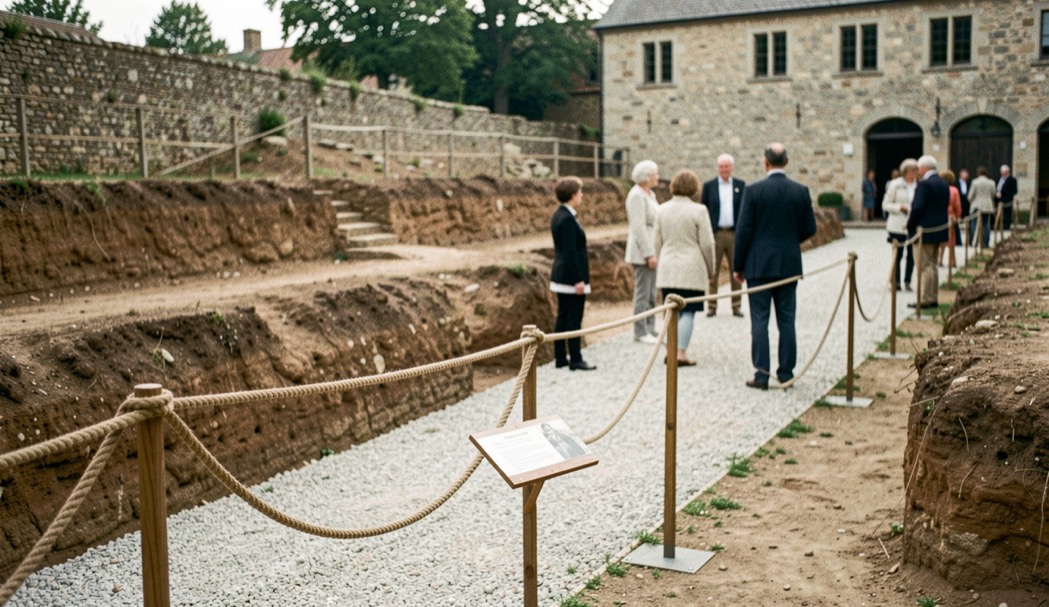
A visit to an archaeological site works best when the child is at least four or five years old, when the drive is under ninety minutes each way, and when the day is built around two or three short stops rather than a full tour. Younger children can go, but the site becomes a picnic with ruins in the background rather than an interpretive experience. The single most useful preparation is not archaeological at all: it is knowing how your particular child handles heat, walking and waiting.
What age is right for a first site visit?
Most children under three will not retain anything about the ruins, and that is fine. What they will notice is the texture of the ground, the wind, the sound of gravel underfoot. If you go with a toddler, plan for thirty to forty-five minutes on site and treat the rest of the outing as a walk. A stroller with wide wheels handles packed dirt paths at places like Aztec Ruins or the accessible loop at Mesa Verde, but not trails with steps or exposed rock.
Between four and six, children begin to ask why. They can hold one idea for the length of a short walk: that people built this, that they carried the stone by hand, that the rooms were smaller than a modern bedroom. Keep the vocabulary concrete. A kiva is a round room with a roof. A midden is a pile of old trash. Those two definitions will carry most of a first visit.
From seven to ten, children can follow a sequence and compare. They can look at a wall and ask what changed between the lower courses and the upper ones. This is the age at which a site map becomes interesting rather than a piece of paper. Hand them the map and let them navigate to the next stop. The sense of leading the walk keeps attention longer than any explanation you can offer.
If you are traveling with a mixed-age group, the practical solution is to give the older children a job and the younger ones a destination. A short activity prepared in advance, the kind of thing collected in guides to kids activities for home and travel, can fill the gap between stops without turning the visit into a lesson.
How far should you drive?
Ninety minutes each way is the outer limit for a day trip with children under eight. Beyond that, the drive consumes the day and the site gets whatever energy is left, which is usually not much. Two hours each way can work for children nine and older if the site itself is the destination and there is a real break in the middle.
Distance matters less than the ratio of driving to walking. A site forty minutes away with a two-mile loop is a harder day than a site ninety minutes away with a quarter-mile paved trail and shade. Check the trail length before you check the map. National Park Service and Bureau of Land Management pages list round-trip distances and elevation gain for most trails, and those numbers are more useful than photographs.
Consider the return drive separately. Children who are fine on the way out are often done on the way back. A stop twenty minutes from home, at a gas station or a park, breaks the last stretch and prevents the final hour from becoming a negotiation.
Which stops make the day work?
Build the day around three stops, not one. The first is the visitor center, where the restrooms are, where the water is, and where a ranger or a volunteer can tell you which trail is closed. Fifteen minutes is enough. Do not let the exhibits absorb the morning.
The second stop is the shortest trail with the most visible architecture. At a place like Chaco Canyon, that may be the trail around Pueblo Bonito, which puts you against standing walls within a few minutes of the parking area. At a smaller site, it may be a single room block. The point is to reach something vertical and built early, while everyone is still fresh.
The third stop is a rest with food and shade, ideally at a picnic table or under a ramada. This is not optional. Children need a midpoint that is not about the ruins, and adults need it too. After the rest, a second short walk is possible if the weather holds, but plan it as a bonus rather than a requirement.
What should you bring and what should you leave?
Water, more than you think. One liter per person for a two-hour visit in warm weather, and more in the desert. Hats with brims, closed-toe shoes with tread, and sunscreen applied before you leave the car. Snacks that do not melt and do not require preparation.
Leave behind anything that invites climbing. Archaeological walls are stabilized, not load-bearing, and the mortar between courses is often modern. A child who has been told not to touch will still touch, so keep hands busy with a water bottle, a map or a small notebook.
A notebook is worth the weight. Children between six and ten will fill a page with a drawing of a wall or a tally of rooms, and the drawing becomes the memory. Bring two pencils, because one will be lost.
How do you handle heat, altitude and boredom?
Heat is the main reason a visit ends early. In the Southwest, the difference between a comfortable morning and an oppressive afternoon can be two hours. Start at opening time. At Chaco Canyon, at Mesa Verde, at Canyon de Chelly, the light and the temperature both favor the first half of the day.
Altitude matters at sites above 6,000 feet. Children acclimatize faster than adults in some ways and slower in others, but the practical rule is the same: slow the pace for the first hour and watch for headaches or unusual quiet. A child who stops talking on a trail is usually a child who needs to sit down.
Boredom is best treated before it arrives. Give the walk a shape: count the doorways in the first room block, find the highest wall you can see, guess which side of the building faced the morning sun. These are not games imposed on the site. They are the same questions archaeologists ask, in smaller words.
What about sites with tours or fees?
Guided tours vary widely. Some are thirty minutes and stroller-friendly. Others involve ladders, uneven stone steps and a ranger who sets a pace. Read the tour description carefully and match it to the youngest person in the group, not the oldest. If the tour is too demanding, the self-guided trail is usually the better choice, and no one will remember what they missed.
Fees are modest at most federal sites, and annual passes cover entry for everyone in the vehicle. Check current hours before you go, because many sites close earlier than the posted gate time and some roads become impassable after rain. A call to the site the morning of the visit takes two minutes and prevents a wasted drive.
The visit does not need to be complete. A child who sees one wall, touches one stone that has been set in a path, and eats lunch in the shade has had a good day at an archaeological site. The rest can wait for the next trip, when they are older and the questions are different.
Source: nps.gov.