Stratum 06 · Learning Resources
Learning Southwest archaeology: books and stewardship
A starter reading list of serious Southwest archaeology books, and the stewardship and citizen science programs that welcome careful amateurs.
- The Notebook desk
- 11 field notes
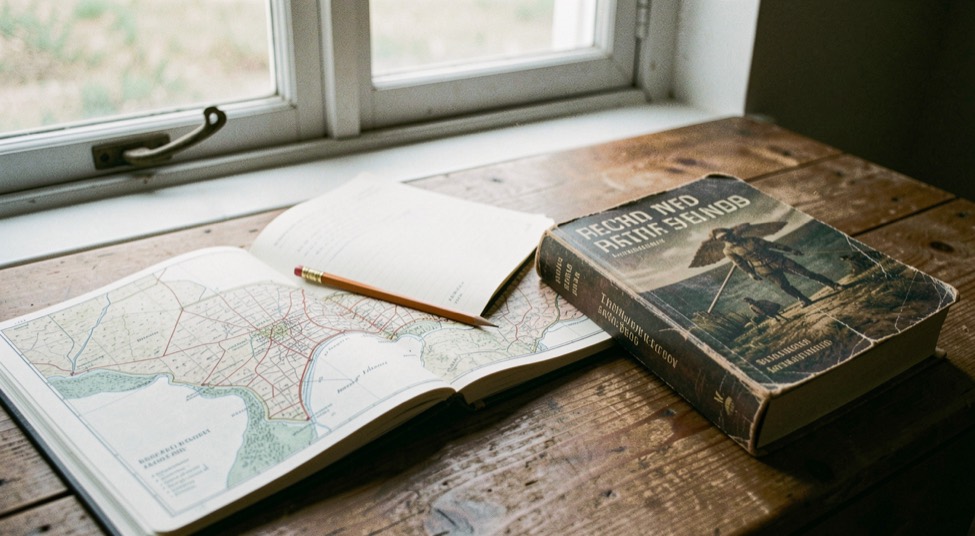
The notebook is a first layer, not the whole site deposit. This stratum is the handoff. One guide gathers a short reading list of books that have held up, from synthesis to narrative, with a note on when each one serves you best. The other maps the honest ways to go deeper than reading: site steward programs in Arizona and New Mexico, avocational certification, museum volunteering and the research center at Crow Canyon, none of which requires you to dig without training.
Both guides end the same way the law does: the point of learning this region is to leave more of it intact than you found, and the best amateurs are the ones agencies trust.
In this stratum
-
Reading Southwest Sites from Orbit: A Sensor Guide
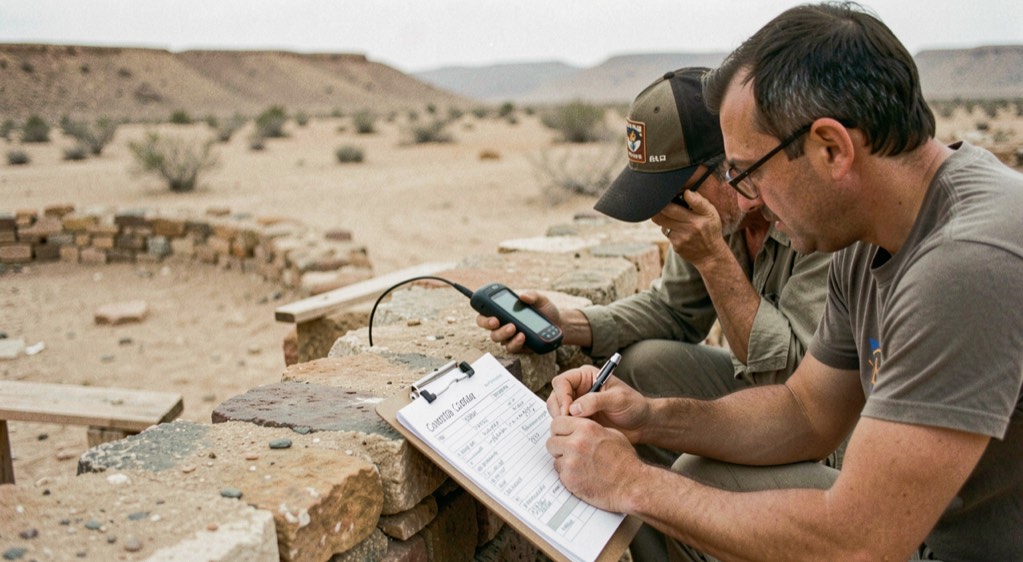
For a Southwest archaeological survey, the practical answer is to match sensor to feature: Landsat and Sentinel-2 for broad landscape context at 10 to 30 meters, commercial or national high-resolution imagery when you need to see a roomblock or a terrace edge, and a revisit interval short enough to catch the ground before vegetation or snow closes the window.
-

Site records in databases: survey data storage
Survey records live in databases the same way they live in the ground: as layers that must be read in order.
-

Two Archives of a Western Slope Town
Two archives describe the same Western Slope town.
-
Field methods before a first season
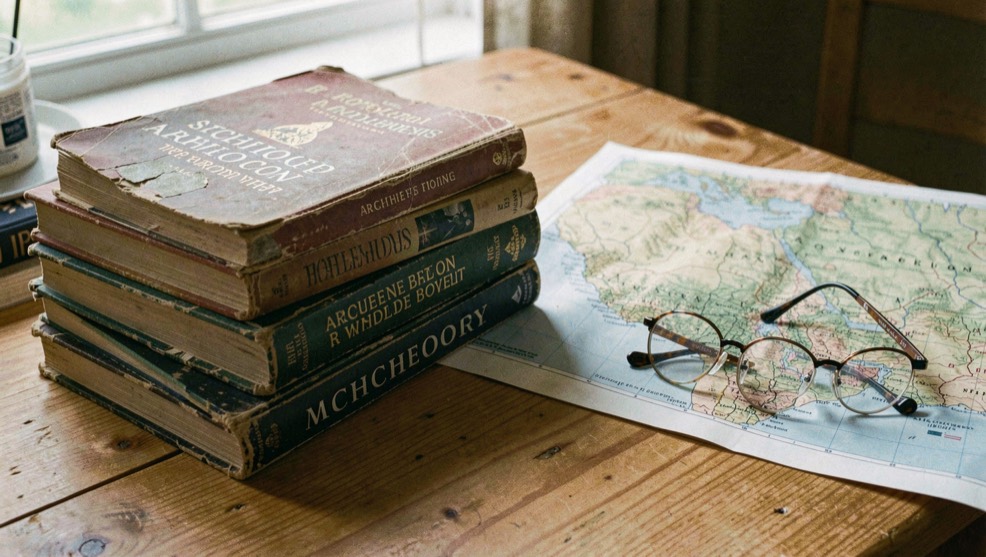
A beginner preparing for a first field season should read one general field methods manual cover to cover, practise three skills until they are automatic (mapping, recording, and soil description), and expect the first week to be mostly walking, measuring, and writing rather than digging.
-

Children’s Books on the Southwest: A Reading Guide
A shelf of children’s books about the Southwest holds up when the pictures show real places and the text respects the people who live there.
-

Choosing a first archaeology book when none is obvious
Most adults who want to learn archaeology buy the wrong first book: the comprehensive one. The right first book is the smallest one that answers a question you already have, and it earns its place by sending you to a second.
-

Reading the museum label: what the small card owes you
A museum label is a compressed argument: who found the thing, where, when, and who vouches for it. Reading it properly takes forty seconds and changes what the object is allowed to tell you.
-

Why museums show a replica next to the artifact
When a museum sets a replica beside a real sherd, beam or basket, it is not apologising for the original. It is answering the questions that glass and distance refuse to answer.
-

The ledger habit: what a maker's field notes keep
A ledger is a notebook that expects to be audited. The disciplines that keep one, boat builders, lure makers, field archaeologists, share the same arithmetic of fact, date and doubt.
-
A starter reading list for the Southwest
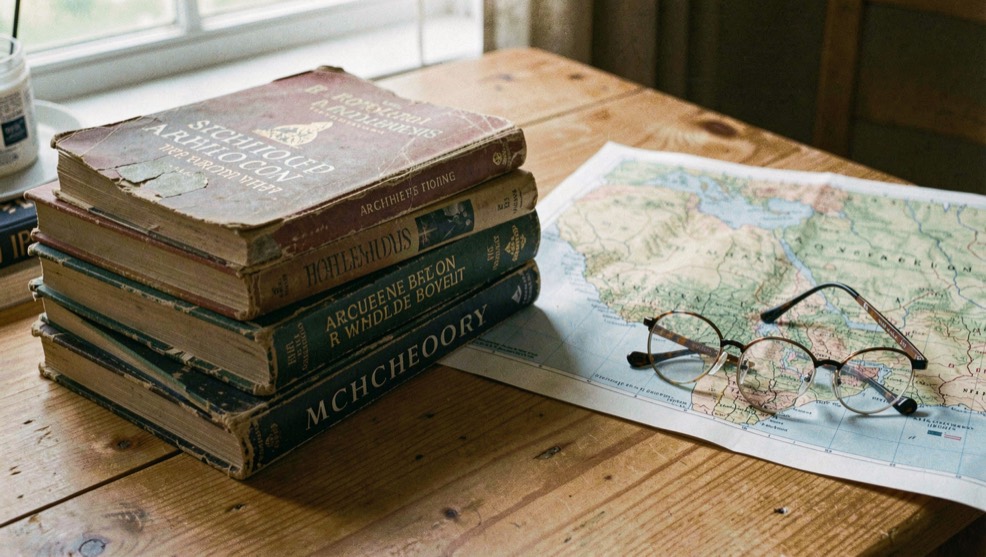
The Southwest generates passionate writing the way it generates dust, and most of it is wrong for a beginner. These six books, two syntheses, one canyon study and three journeys, are the ones that still teach.
-
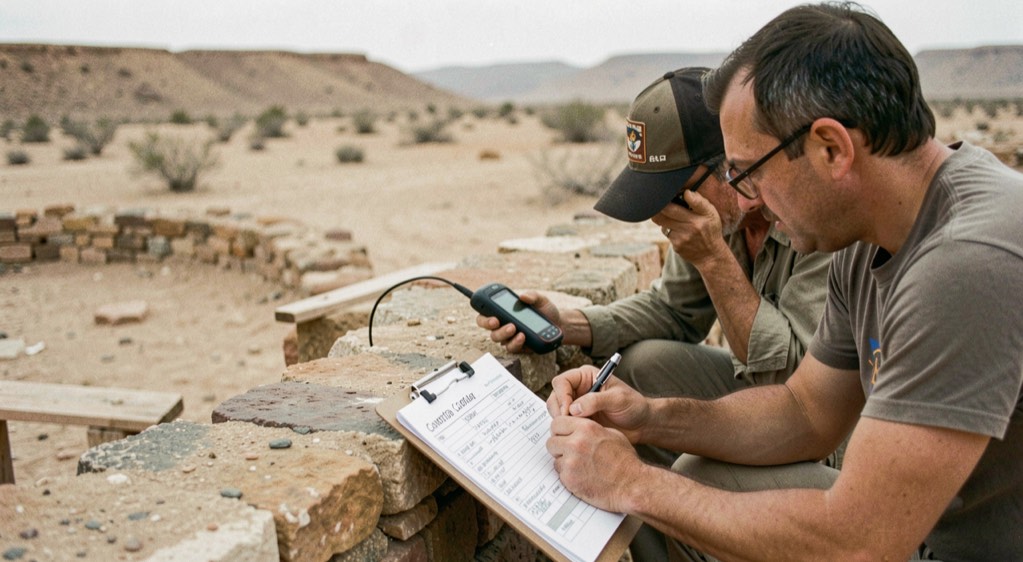
Learning archaeology without a shovel
The Southwest runs on trained volunteers. Site stewards walk sites and report damage, avocational programs teach method in the evening, and research centers take amateurs into the field legally. Here is how to join.
Every field note in this stratum is dated against the Pecos Classification timeline, the spine of the whole notebook, and two neighbouring strata extend it: Ancient Peoples and Iconic Sites.