Ancient Peoples
Dice and gaming pieces in the ancient Southwest
Dice and gaming pieces recovered from Pueblo, Hohokam and Mogollon contexts show that games of chance were part of daily life in the ancient Southwest, but the objects themselves support only a narrow set of claims.
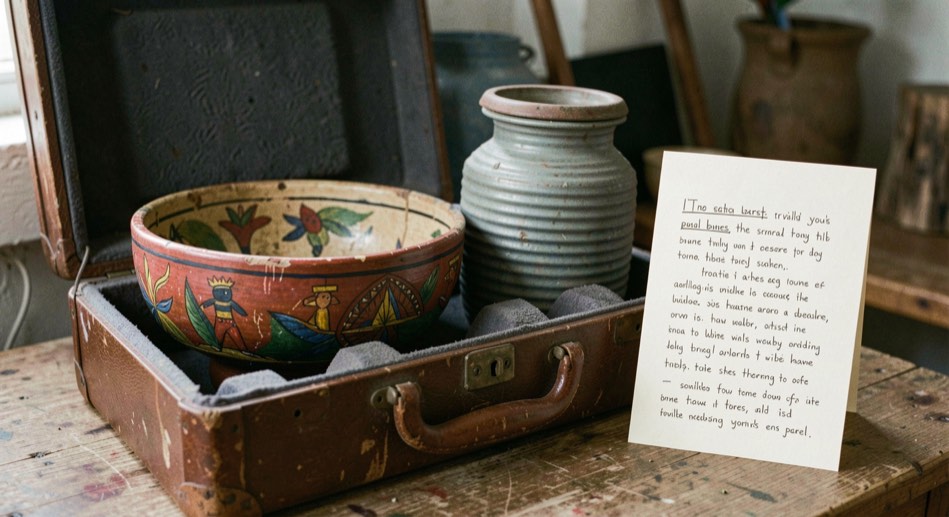
Dice and gaming pieces recovered from Pueblo, Hohokam and Mogollon contexts show that games of chance were part of daily life in the ancient Southwest, but the objects themselves support only a narrow set of claims. They establish that people made marked sticks, cane dice, stone discs and painted gaming stones, and that these items were kept, carried and sometimes buried with care. They do not, on their own, tell us the rules, the stakes or the meaning of a win. For readers who want a plain-language example of how a modern jurisdiction explains risk and help around games of chance, the Danish site om ansvarligt spil treats the subject as a public information matter rather than a puzzle of artifacts.
What objects are actually found?
The archaeological record of the Southwest contains four broad categories of gaming material. The first is the cane or reed die, a short segment of hollow plant stem flattened on one or more faces and marked with pigment or incised lines. Examples come from Pueblo III and Pueblo IV contexts in the northern Southwest, and similar forms appear in the Hohokam area of southern Arizona. The second is the wooden stick die, a split length of hardwood with one face shaved flat and painted; these survive mainly in dry caves and rockshelters, where desiccation preserves organic material that open sites lose.
The third category is the stone disc or gaming stone, usually a flat pebble ground to a rough circle and sometimes painted on one face. Discs of this kind are common in Hohokam assemblages and are often described in site reports as gaming pieces, though the label rests on analogy rather than direct evidence. The fourth category is the set of small painted or incised objects, including bone tubes, shell pieces and shaped sherds, that appear in caches and in some burial contexts.
Dating these objects is uneven. Organic dice from rockshelters can be radiocarbon dated when enough material survives, and painted stone discs are dated by the ceramic associations of the deposits that contain them. A disc found in a room fill with Pueblo III pottery is Pueblo III in age, but that date belongs to the deposit, not necessarily to the moment the disc was used.
How were these objects used?
Direct evidence of use is thin. Some cane dice show wear on the flattened faces, and a few wooden sticks have pigment worn away at the edges, which is consistent with repeated handling. Beyond that, the objects are silent. There is no Southwestern equivalent of a written rule set, no painted scene showing a game in progress, and no surviving oral account that can be tied to a specific prehistoric object with confidence.
Ethnographic records from the late nineteenth and twentieth centuries describe dice games among several Pueblo communities and among groups in the southern deserts. These accounts describe games of chance in which players throw marked sticks or dice and score according to which faces land up. The accounts are detailed, but they document the games of their own time. Using them to explain a thirteenth-century disc requires an assumption of continuity that the archaeological record cannot test.
What the objects do support is a modest claim: people in the ancient Southwest made and kept small, portable items whose markings served no obvious utilitarian purpose, and those items were sometimes placed with the dead. That pattern is consistent with gaming, and gaming is one reasonable interpretation. It is not the only one.
Are they really dice, or something else?
The word die carries assumptions. A die in the modern sense is a randomizing device with agreed faces and agreed values. Some Southwestern objects fit that description well, particularly cane segments with two or four marked faces. Others do not. A painted stone disc with a single design on one side may have been a counter, a tally, a token or a decorative object.
Site reports often hedge, and readers should notice the hedging. Phrases such as probable gaming piece or object of unknown function appear frequently in the literature, and they are honest. The strongest cases rest on context: a set of similar marked objects found together, or a marked object found in a burial with other marked objects, supports the idea of a set used in a shared activity. A single disc in room fill supports much less.
It is also worth separating gaming from divination. Some marked objects in the Southwest have been interpreted as ritual paraphernalia, and the boundary between a game and a divinatory practice is not always clear in the ethnographic literature either. The objects do not resolve that boundary for us.
What does the wider record add?
Gaming pieces are not unique to the Southwest. Marked dice and counting pieces appear in many parts of the world, and the comparative record shows that small marked objects can serve many purposes. That breadth is useful as a caution. It means that the presence of a marked object is not by itself evidence of a game, and it means that Southwestern examples should be assessed on their own contexts rather than by analogy to better-documented regions.
In the Southwest specifically, the distribution of gaming material is uneven. Dry caves and rockshelters preserve organic dice and sticks; open sites preserve stone and ceramic pieces. Any map of gaming in the region therefore reflects preservation as much as it reflects past behavior. A canyon with no reported dice may simply be a canyon where organic material did not survive.
What can a visitor see?
Museum collections are the practical starting point. Several institutions in Arizona, New Mexico and Colorado hold Southwestern gaming pieces, and a few display them alongside other small portable objects. Labels are usually cautious, and that caution is worth reading closely. A label that says gaming piece is making an interpretation, not reporting a fact.
For readers planning a visit, the useful question is not whether an object is a die, but what the excavators recorded about where it was found. Provenience, the precise location of an object within a site, carries more information than the object's shape. A disc from a sealed floor assemblage tells a different story than a disc from disturbed surface context, even if the two objects look identical.
What the objects do not support
The objects do not support claims about stakes, winnings or social consequences. There is no archaeological signature for a lost bet, and no way to read anxiety or compulsion from a painted pebble. Modern discussions of gambling harm rely on interviews, clinical data and regulatory records, none of which exist for the prehistoric Southwest. The comparison is worth stating plainly because it is easy to slide from a marked stick to a story about risk, and the evidence does not carry that weight.
What the objects do support is narrower and still interesting. People in the ancient Southwest made small marked items, kept them, carried them between places and sometimes buried them with their dead. Those items were part of ordinary life, and the fact that they were made at all suggests that chance, uncertainty and play had a place in that life. The rest is interpretation, and it should be labeled as such.
Source: britishmuseum.org · nps.gov.